


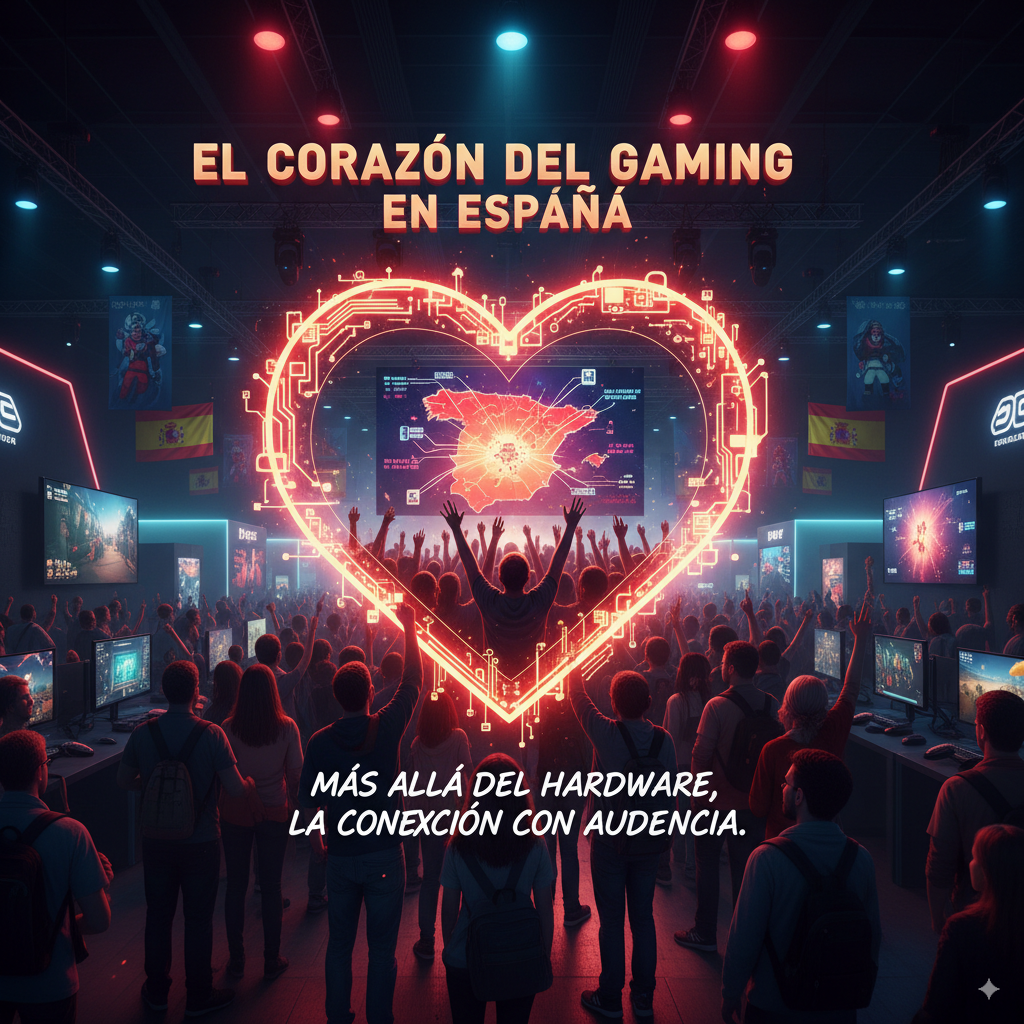
(AI GENERATED) Spain has established itself as a key market in the global gaming industry. Far from being a mere pastime, video games are a cultural and economic force that generates billions of euros annually. From esports that fill virtual stadiums to the communities that form around each release, gaming is, in essence, A shared experience . For computer hardware companies, like yours, that equip this legion of enthusiasts with PCs, keyboards, mice, gaming chairs, and much more, understanding this reality is the true "cheat code" for success.
Spain: A Gaming Market in Full Boom
The gaming scene in Spain is vibrant. With millions of active players, constant growth in esports consumption, and increasing adoption of new technologies, the country presents fertile ground for brands. Spanish gamers are demanding, well-informed, and seek not only top performance but also an experience that resonates with their identity.
This is where the human factor comes in. Your company doesn't just sell components; it sells Dreams, competitiveness, immersion, and hours of fun . A gaming PC isn't just metal and silicon; it's the gateway to infinite worlds. A mechanical keyboard isn't just plastic and switches; it's the tool that decides victory or defeat in a crucial moment. A gaming chair isn't just comfort; it's the throne from which legends are forged.
The Imperative Need to Connect with the Audience
In a market saturated with options and with an audience constantly communicating through forums, social media, Twitch, and YouTube, differentiation no longer lies solely in technical specifications. It's about to establish an emotional and authentic connection .
-
Understanding Gamer Language: Gamers have their own slang, their own idols, and their own concerns. Speaking their language, recognizing their memes, and understanding their challenges (from high ping to the need for stable FPS) is the first step in building trust.
-
Beyond the Product, the Experience: Your community isn't just buying a mouse; they're buying the precision that will give them an edge. They're not just buying a graphics card; they're buying the visual fluidity that will fully immerse them in their favorite game. Your campaigns should sell the experience your hardware enables, not just the hardware itself.
-
Create and Nurture the Community: Social media is your main square. Platforms like Twitter, Instagram, TikTok, YouTube, and Twitch are the epicenter of gamer culture. Here you can:
-
Hear: Monitor conversations, identify trends, and understand your audience's needs.
-
Interact: Respond to comments, answer questions, and participate in the dialogue.
-
Generate Valuable Content: Tutorials, gameplay videos with your hardware, interviews with eSports pros, giveaways of complete setups, or even relevant memes.
-
Fostering a sense of belonging: Make gamers feel like part of your "team" by creating a space where they can share their own experiences with your products.
-
-
Authenticity and Transparency: Gamers are experts at spotting forced marketing. Collaborating with influencers who actually use and understand your products, showcasing the development process, or even acknowledging mistakes and learning from them, builds credibility.
-
Personalization and Relevance: Use data (analytics are vital here!) to understand what kind of content resonates with each segment of your audience. A flight simulator fan doesn't have the same needs as an esports shooter player. Offer relevant messages and products for each.







Share: